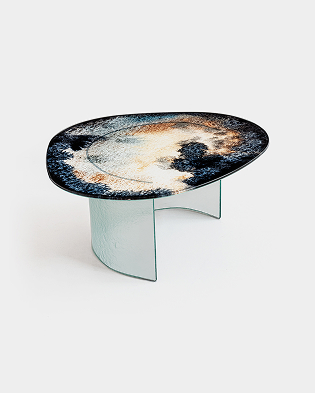
Gruuvelot
by Patricia Urquiola, 2024-2025
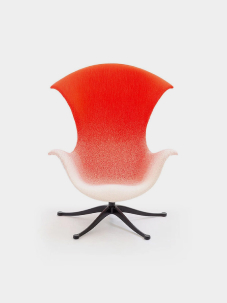
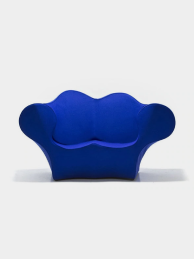
The Gruuve sofa transforms itself, evolving its form into a living entity, an organism that develops in space. Growths, prostheses, organic volumes are intertwined with its structure, creating a sitting ecosystem that invites interaction and redefines the relationship between body and object. It is no longer just a piece of furniture, but a tactile habitat that allows different types of interaction with the body.
If Gruuve captures the free spirit of the 70s with its fluid forms and dynamic modularity, Gruuvelot amplifies the sensory and symbiotic component. Its surfaces do not only welcome, but seem to grow and adapt, as if the object itself was in a continuous state of mutation.
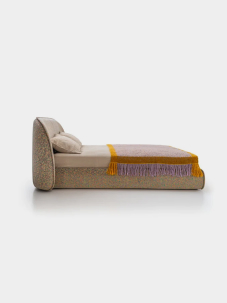
To make this metamorphosis even more radical are the fabrics that wrap Gruuvelot: the first, exhibited at Palazzo Bovara in the exhibition of Elle Decor Italia Alchemica, is produced using a water-based printing technique that reduces water consumption by 90% and greenhouse gas emissions by 80% compared to traditional processes. The other, visible in the window of the Moroso Flagship in via Pontaccio, is covered in Regos, fabric designed by Patricia Urquiola for Kvadrat Febrik, inspired by nature and the concept of stratification.
The name derives from regolith, the layer of debris covering rocky surfaces and has roots in the Greek term regos, meaning “mantle”. This idea of layering and texture is reflected in the fabric’s design, where contrasting tones and irregular patterns create an organic effect. Visually reminiscent of classic tweed, Regos reinvents it with a contemporary edge, featuring a “false plain” effect born from a two-tone weave that plays with contrast, evoking the iconic salt-and-pepper motif. Its fragmented graphic pattern, deconstructed and reassembled with a subtle misalignment, disrupts the rigidity of the grid, adding depth and a sense of movement to the surface.
This is a special preview of the new textile for Kvadrat Febrik, which is officially launching in September 2025.
Two evolutions that not only concerns design, but also the way we think about sustainability in the world of furniture.
Gallery
Patricia Urquiola
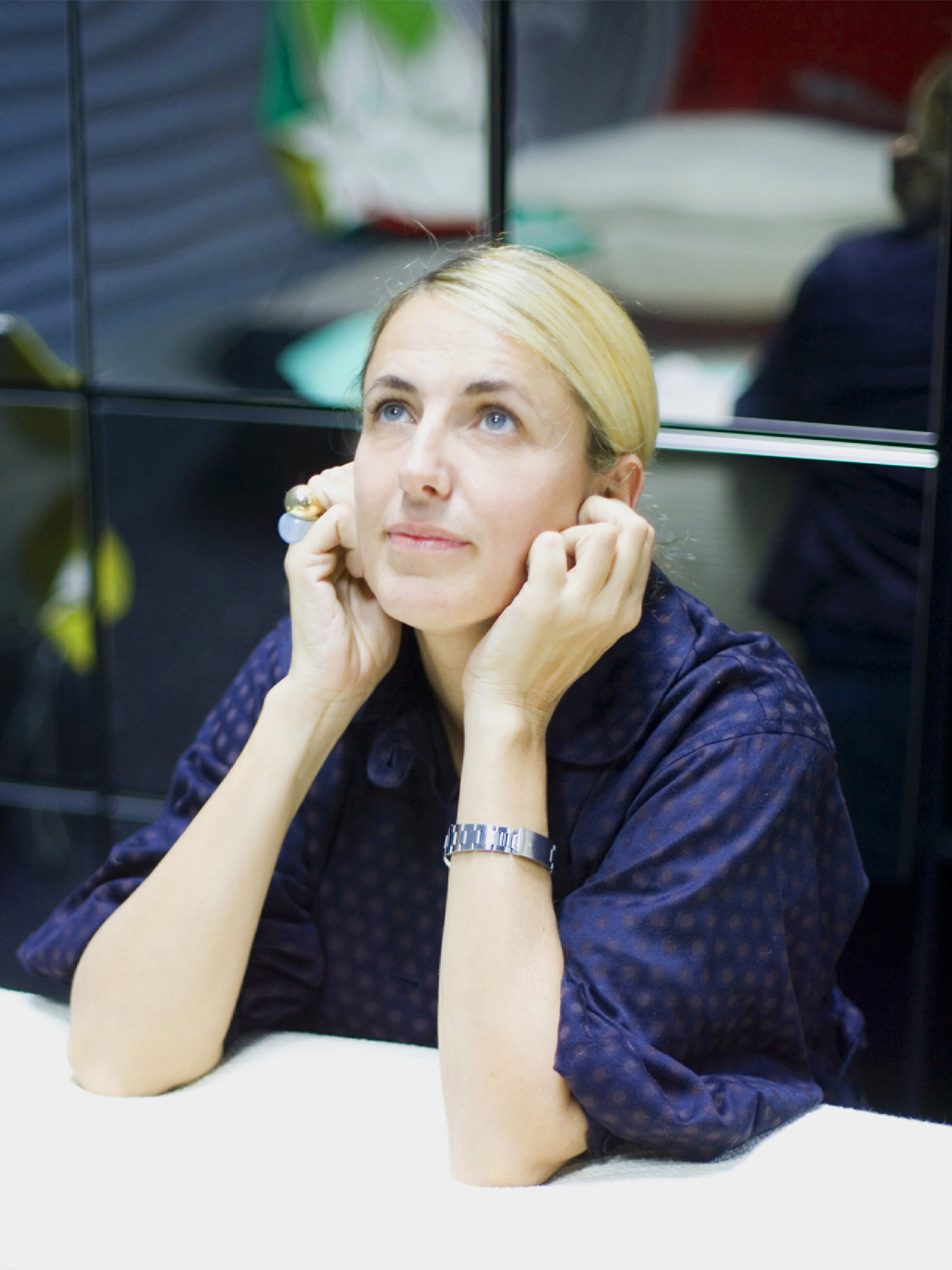
For over twenty years she has been one of the most important figures in the world of contemporary design and icon of female design. After graduating in 1989 from the Politecnico di Milano with Achille Castiglioni, she met several prominent personalities who helped to outline her career: Achille Castiglioni, of whom she became assistant in the industrial design course, Vico Magistretti, with whom she collaborates in the product development office of De Padova, Piero Lissoni and finally Patrizia Moroso. Her work ranges from the creation of objects to installations, architecture projects, showrooms, hotels, scenography and private homes.
Many of the products are present in the collections of MoMA in New York, Musée des Arts Décoratifs in Paris, Vitra Design Museum, Victorian & Albert Museum in London and Triennale Museum in Milan.